Monday, 5 November 2018

On Soul

This part of composition would be placed in the Qayserium, under the section Microcosmos.


An essay elaborating on the necessary but empty concept of "I-ness", the genesis of the perception of soul, and the obliteration of the synthetic Self in favor of the opaque but all-embodying World.

1.              We do not reject the inner workings of the soul, but only deny of the phantasy of an inner-world capable of inference and deduction.

2.              The world as we perceived can only be under of sensible qualities, instead of intellectual. And it is from these sensible qualities, a unity that we call as body can be deduced. And only from this united convergence [body] can divergences in reference to it can legitimately drawn upon.

3.              The faults of psychological inner world is by at least two ways; 1) its belief that it can gain knowledge (and thus forming deductions) from intellectual qualities, or 2) it believed that it possessed an inner convergence where it can draw inferences from.

4.              But, as the only way for us to know our body is only through sensible qualities, instead of intellectual, the inner workings of the psyche in forming an inner-body is indubitable false.

5.              Inference can only be drawn from perceivable data that our sensibility can pick up, and for this it requires a fixed border and demarcation from one specific data to another.

6.              If such border were not present, than everything would fall into a discordant unity and then inevitably, nothingness. For, it is the border between data that give rise into specificities, and it is from these specificities our sensibility can pick up the existence of one or more existence.

7.              The inner-workings of mind, utilising only the after-images of sensible pictures from outside can yield no knowledge, but only circular ruminations. It tried to expand itself from an empty yet necessary concept of “I” into an individual and dynamic “I”. But this individual ego, as we said, can only be realised from the specificities born from the external world. In other words, the “I” as soon as it escaped the boundaries of material world, precipitated into a universal and united “I” with no borders and identity. The only way for this “I” to at least attach new colours to it is by appealing to memories, and memories are after all, a mere repository of sensible datum. Thus the best way to understand the heart of a serial killer is not a probing inside his mind, but at the traces he left in his wake.

8.              This “I”, as we said, is a necessary concept but empty. Necessary, in terms that; it provides form and a pole for the content to flow into. Without form, no material can register upon our sensibility. For an example, a sentence without “I” vaporised into nothingness, without aim, hanging in air. It has no pole to latch into, and escaped into nothingness it originated. Yet, this I, for an example, the “I” used by the narrator in novels stand firstly for the narrator, yes, and so display an individual character. But if this “I” of the narrator is so individual and unique, no one can understand the passage, or even understand the content of the sentence. But, nevertheless, this “I” can also be understood by everybody who is literate; it displays an illusion of uniqueness by appealing to the one who writes, but at the very fundamental, this I is the only way he can use to make himself comprehensible to everyone, and ironically, also to himself. And so, it is also empty for anybody can fit into this “I”, in terms of understanding its function. Descartes’ “I” which he claimed to be the sole existence of the concreteness of experience of the individual is false and contradictory. For the “I” is a necessary concept in understanding, but not necessarily in actuality. We can also imagine the Martian, the sloth, the Devil spoke with their own “I”-ness, but this doesn’t add even an iota to their actuality. Descartes’ “I” can only be both actual and existed, if this “I” can somehow obtain physical datum which this “I” can latch into. In other words, the "I" is an illusion of the universal playing to be individual.

9.              And so, the “I” is a necessary concept. To deny this is to be absurd. But we have explained that this “I” is neither unique nor specialised. The only way for this “I” to be me, you or anybody specific is if it can appeal to physical datum that converged into the pole of the “I-ness”.

10.           And so, what of the colourful inner world we framed around this “I-ness”? It is a beautiful world indeed, but nevertheless useless in forming inferences or new knowledge. It is not even capable of producing analytical knowledge for itself, for analytical must be of itself, and this “I” has already achieved complete analytical knowledge when every sane man pick it up knowing it as an essential concept. Why the fact that it is empty escaped from many people mind, I know not. But there can be no further extension analytical knowledge of the “I” other than itself. The “I” is the most complete analytical knowledge we can ever have. It is opaque and itself circular upon itself.

11.           What’s left for the function of this “I”? Is this “I” is in fact the soul? This I know not. The expansion and fallacy of bestowing this empty “I” with extensions has muddled everything. Scepticism running rampant and can only be countered by unfortunately radicalism, for the proponent of psychological extension cannot appeal from anything other than, paradoxically the analogy of the external world. I have heard one who tried to explain the Prophet’s ascension by using the analogy of a fish who had spent his lifetime in the river but one day are transported outside in a water bowl. He was brought to explore the other world and then returned to its habitat. It tried to explain all those wonderful things he had seen but inevitably, no one believed him. While this narration certainly wonderful, but it shows nothing other than a chimera in trying to prove the existence of [an individual] soul, one is even prepared to transpose the entire world with it. It demanded for a water bowl to able to infer an immortal soul capable of knowing other worlds/ sensible qualities while retaining its individuality. This duplication of world, or imagining of multiple world, only make thing worse by instilling doubt to the existence of the external world. If this world can be transposed into another one by a Creature, than is this world even real? Not only it failed to explain why the soul remain individual (it only showed that as long as there is possibility of physical datum, the convergence still can occur), it now raises doubt to the very foundation one being is at first to be known! Aren’t the Holy Book expressed these conflicts by an express proclamation, that only He understood the business of the soul?

12.           Is it possible for this empty concept of to be expanded, forming what we called as personality? Personality betrays a flavour of fundamentality in its application, but from where we know of this personality? I know that I am lazy because I do nothing to complete my work. I do not know that I am lazy from an essential supra-natural urge of laziness, for this is absurd. This personality then is synthetic rather than essential knowledge. It is a synthesis of physical datum converged and process upon the pole of convergence. It then materialise synthetically to form this nuclei of individuality, the cognizant cogniser. The "I" then advances from an essential yet nonindividual concept to a personalised concept, that is the cognizant cogniser. When we read out loud the passages of a novel that uses a first point of view narration, all of the audience can sympathise and understand that this I fit into everybody who listened, but when the reader called upon a name, say, Ali, then this unique Ali answered the call. This Ali, is what we call as a cognizant cognizer. What makes a cognizant cognizer? First, it requires to be placed in a world that he can gain cognition, i.e only in a physical world which this cognizer can be cognizant of the inputs impressing upon him. Secondly, it requires a convergence of physical datum that it can gain peculiarness distinct from other distinct objects. Thirdly, it requires a synthesis to set this pattern of convergence fixed into its cognition space, i.e. consciousness. This consciousness that we always call upon our essence of being, is an essential concept for a convergence to become a materialized nuclei. Without this synthesis, there would be no convergence and thus no subject. The cognizer is a cognizer because it have the power of synthesis. It is cognizant for it is placed in a world that it can gain cognition of the impression. Without these three requirements, everything would break apart into a silence and total obliteration.

13.           How can this transcendental "I" advanced into a unique cognizant? In other words, how could we gain consciousness? This would be a ridiculous question as equal in asking how the soul inserted into the body. Both consciousness, I, soul, body is a plethora of synthetic concept, that is essential in gaining any cognition. It is a priori knowledge that already set in place for one to be here at all. The same as we can answer that the ball falls down to earth due to gravity, but what is gravity we can never answer at all. But observe that the difference between "I" and this cognizant cognizer is the presence of the process of synthesis. The "I" in the public reading was left, in a way, hanging in the air, registered in sensibility but lack the synthesis. We are not capable of synthesising this transcendent "I" into an individual cognizer for it would be redundant. In registering the phenomena of public reading as conscious, we already had performed the synthesis, resulting in the context of the World, a planting in the World. And that is why, the synthesis is not and are not required to be performed at the "I", for the World has already planted.

14.           The World, or the context, the planting is the immediate result of the synthesis. Rather than providing a material pole of self, the synthesis would instead produce a World. And that is why, we gain cognition of the world as in-World, rather than out-World. We are here inside the world, in perfect unity with it rather than gaining cognition form it form outside of it, like an astronomer gain cognition of the sky through the lens and the distance of a telescope. The sense of traditional self is totally obliterated/absent in our cognition of the world, a total integration has occurred. The constellation pf physical datum is set fixed in place by synthesis, as the firmament stood silent and the world became calm, the World is then formed.

15.           I am conscious of all of this philosophizing would not dissolve the notion of soul inside all of us. Kant said that whenever he closed his eye and try to search for this concept that we called as soul, he only stumbled upon something but he can’t get anything else from it. The notion of soul, so sharp , crisp and all embodying a concept is so appealing to us. Our demonstration of the highest peak of individual consciousness, i.e. the World is after all ended with a broad base, an opaque end. This of course is not satisfying for the enterprising soul. From 64, 32, 16, 8, 4, 2 then there must be a 1, this exasperation of a single and sharp end of infinity is innate in every of us. After all, this force of unity might be one of the many laws of nature. But whether an individual soul existed or not, in the form of material, we can never determine. It is wholly a metaphysical debate, and if there’s any advantages from the debate, we can never gain for it, for the goods of metaphysical hold value only in the metaphysical world, like a currency of one nation only possess value in that country not from other. In this physical world, the culmination of what can we call as the soul ends with the conception of the World. To march further, where can we go? And more importantly, for what?


Friday, 8 June 2018

On Fatalism and War

Hi guys :D


I was browsing through my documents and found a short essay, written during my friends and I travel trip. The essay was written in the winter off 2016, on the cruise ship on board for the France port. I can recall that during the time, the world was ablaze with the news regarding the erupting battle in Aleppo. And, of course, some of the people quoted a few Hadith here and there regarding the prophecy of the Great War (al-Malhamah al-Kubra), how the Mahdi roused the Muslims and defeat the infidels et cetera et nauseum. I can't remember wholly the full hadith, but the essay was written in such context.

It is important to note that any of the essays are of experimental values, for I realised that it is a loss for anybody to concede to an idea in the early years and forsake the reading of other ideas, in favour of stability and docility. The points elaborated here in the essay were conceived in me being so steeped in Jungian and Franklian's ideas, it reeks so much. I abandoned most of ideas in the body in light of new ideas and milestones. As Keynes once jeered for him changing his ideas, he retorted, "When the facts change, I alter my conclusions. What do you do, sirs?"

And so, here you go, the essay On Fatalism and War. (The italics are of a later edition)

It is normal for the self to remain dormant, like a stagnant pool; only to be shaken when someone creates a ripple by throwing a stone in it. The stone could be of any size and any shape, thrown in any time but it is in the only time the stone thrown that it will create a massive ripple. Out from nowhere, the stagnant pool shudders and roared back. The colour of the pool changed; you can always see your reflection in it all this while, but now it is the colour of silt and dirt. And when the ripple has ceased, like every surge of energy, it will reach an equilibrium and gone to the wind; the pool thus returns to its stagnant state.

An important note; that this is not a critical essay on the attitudes of the fatalists of our age.  This is only a monologue regarding the whims and action of a stagnant pool. Why bother turning our time to the ever-changing action of man while we can stare to a pool all day long, with lesser headache and debating?

The self will default to a relaxed and calm state as no man can retain long trains of complex feelings or thoughts without getting drained. Norms and etiquettes and laws of energy decreed that man should be dormant and stable. He will treat his everyday as indeed just another day and details are unseen except when he channeled himself to commit, as in the case of everyday challenge and burdens.

But then, lo and behold, someone throw a stone into the pool. And what a great ripple it made. Thus, with just a single but great ripple, the pool has forgotten the small ripples created everyday or every week by the rains or wind as it is more expedient to grasp and elaborate on a single major event than the many minor events. The pond is intrinsically prone to polemics. It is more worthwhile in the terms of energy spent and the feedback received. Even in social interactions there are strict application of rules of supply and demand, this capitalism of polemics.

Now let us observe on the mechanism of effect of the ripple to the pond. The pond would not regard the normalized ripples of raindrops as an important event because the self registered it as a part of self.  The body would only respond to something alien, to a new unlocked experience. The alien experience creates such a large magnitude of a response that can be compared as the response of antibodies to non-self particles. The feeling of fear or heightened interest upon the alien experience is due to the channeling of libido from the orbit of unconsciousness to consciousness. Archetypes are unlocked and as a defence mechanism, libido is expanded to explore and to normalize the experience.


The archetype of a battle to end every battle is present in many cultures and religion. The Nordic notion of Ragnarok is then echoed throughout the ages and millennia as the Apocalypse, Malhamah al-Kubra and also the World War. It is somewhat ironic when the self-proclaimed kings of consciousness in the modern era, during the onset of World War I said that “it will be a war to end all wars”, which again echoes the Ragnarok archetype. Yet, even in the end of Ragnarok, this mythical "war to end all wars", yet another beginning sprouted. Can we ever comprehend what an end really means?

The presence of a continuum of understanding must not be immediately subjugated to a doctrine of pluralism. The presence of such a uniformed expression of thought in cultures or what Adolf Bastian termed as “Elementergedanke” is actually pointing the intricate and weaving of experiences shared among humankind as a species, producing a galactic-sized beauty of a tapestry. We must calibrate our understanding to not shudder at every effort to bring humans together as an undercover act of Satan, but as a chance to reconcile the already fragmented people of our species. It is in this time of woes and agony, the right time for us to reconcile the fragments together.

The Ragnarok archetype along with other archetypes that reflect distance and depth are a complex and sophisticated product of culture. The archetypes reflecting distance enabled us to form a perspective of future, and when every two parallel lines extrapolated to the horizon, they will converge to a meeting point at the far line of sight; an end. This distinguished character of futuristic belief will naturally give birth to an end, and it doesn’t have to be entirely fatalistic or grim. But as the archetype of future events produces the feeling of end, it also creates the perspective of depth. Depth and distance creates a path to the meeting point and naturally the woes of life will ultimately give birth to the feelings of sorrow and existential thinking.

The archetypes in the aforementioned categories are also a late product of consciousness. The Greeks, for an instance, have primitive sense of future, or even time. Oswald Spengler noticed it through Thucydides who famously said that before his time there was no significant event at all. The Greeks lived in the present and there was no sense of depth, distance and ultimately future. Pythagoras also mentioned that two straight lines would never meet each other, contrasted by our findings in the previous discussion. The Greeks then are sheltered from any sort of complex form of sorrow and the existential Angst, forever sheltered by the notions with their forever circling cycle of dramas and comedies.

Thus, it is clear why the classicists are devoted to the Classical Ages. The emancipation of time or even its un-existent, are God-like to them. To live above time or if there’s no existence of time at all  really echoes eternity and paradise. Almost all notions of paradise are described as living eternally or with no notion of time at all. And the Pythagorean mindset of the Greeks, where parallel lines will never met will never shackled the Greeks by the apparatus of perception and as Blake said, “If the doors of perception were cleansed every thing would appear to man as it is, Infinite.”

We have elaborated in simpler terms how the species of Ragnarok archetypes will eventually bore the feeling of acute end and conclusion. We must next examined the side products accompanies the feeling of depth and distance to the modern man, why the modern man can no longer ravel freely in Dionysian orgies and live above time as the Pythagorean man.

The side products from the acute feeling of distance and depth, as we mentioned, are sorrow and angst. The examination upon the sky will naturally bestow within us the feeling of unexplored boundaries and transcendence, as Eliade pointed in The Sacred and The Prophane. Thus, the modalities of depth and distance will give us sorrow and angst. It happens to many of us the Zeno paradox, the losing feeling in conquering distance and space and the subsequent installation of the feeling of doubt whether motion existed or not at all. We, the People of the Delta are the Achilles who forever chasing the tortoise who started the race first, only to end up a point in the distance where the tortoise has already surpassed before. The conception of distance instilled in modern man such fatalistic conception of life and in pursuit of the happiness, which are romanticized in so many works to be only found “at the end”. Even in the fairy tales and children’s fables, the “happily ever after” is at the end of the story. The problem is, to the modern man, whether there is an end after all after all. Also, the toil to reach the end yields to no motion at all.

For what are a "beginning" and an "end" except an expression of the ideal, that can never be captured in experience? Of course in supposing a chain of causality, we rightly presupposed a beginning and an end. But, to choose a finite and determined point in an infinite chain and call it a beginning or an end would only yield a gross contradiction. The problem of a beginning and end of an infinite chain of causality is an antinomy that can never be captured and analysed in experience. We can conceive that there is a beginning and an end, but to presuppose this point as the beginning, again would be a contradiction, for we essentially try to force something finite to a something infinite. The only way to solve this antinomy is for us to acquire an intelligible intuition, rather than the default sensible intuition all of us have. It is through this intelligible intuition, where concepts and ideals can be investigated on the level of actuality, can only then we solve this contradiction. But for us human being, we can only investigate of what is actual only on the objects given in sensibility. Unless we somehow unlocked this ability of intelligible intuition, the so-called God's mind where in His mind is where everything actual lies, we can never solve this dead end. Until then, we must be satisfied on the axiom that if something is possible in thoughts, doesn't necessarily it follows to be actual too in concreto. As Kant rightly points, thinking about a 100 thalers doesn't end with that 100 thalers in my pocket. 

We have demonstrated so far to indirectly shows how the feeling of an end, sorrow and angst are the natural product of human civilization’s advances. We have yet to show directly that the sorrow and woes of life do not belongs to the unlucky and accursed.

Humans have learnt that what causes pain to be avoided at all cost but ironically it is the pain that advances mankind. It is the discovery of pain sparked the terrible genius of a problem solver, a starting point of an infinite domino trail. It is the experience of pain awakened the first man from his paradisiac dream and slumber and to get working in reality. It is a part of a human’s experience and it is high time for us to recognize and live with our shadows. The reconciliation of two opposites is what make the world and completes it. The night we shall pass and the woe we will surpass.

Therefore, we have shown that the instinct of life to a completion cannot be separated with the sorrow and angst accompanying it. The acute sense of sorrow is a sign of progress or even maturation as the newborn babe cannot feel sorrow, he escaped time and lives in the present, all he can ask or wish is the quenching of his appetite but never for sustenance, which only formed with the conception of depth and distance.

To relate everything into context, I have seen that the recent light on the Aleppo crisis has made some of us pessimistic and burden themselves to search for hadiths on the Apocalypse to justify their sorrow. They scurried for a hadith to justify their pessimism but forget other hadiths that our Prophet reminded us to plant the seeds in our hand even the morrow is the Apocalypse. It is very daunting indeed that the apparatus of religion, which has produced the best of human in our history, has now been used as a suicide tool.

The knowledge of our psychology that there will always be blood and wars never intended to make us be and grow cold; it only demands us to grow wiser. The knowledge of our self enables us to strive for the perfection of our selves, not to bother us with the post-pubescent conception of paradise-on-Earth. Communism and all of the ideologies intending to create a paradise-on-Earth have failed because they search paradise in the wrong place.

It is shameful when we explained to them that the Syrian clerics themselves prevent for any military intervention, they will immediately retorted “We do not involve in politics”. It is indeed daunting how little it needed to stir the youths of today and how shallow their understanding regarding the issues they are speaking about.  Nevertheless the youths of today make an exemplary subject for self-improvement. Never will they agree to wipe the froth of spirit and frenzy at the side of their mouth; indeed they wear it as a sign of pride and medal of participation. And they scorn the thinking people, to be inactive, passive and it is not hard for us to seek ones who will say the thinking people as cold and merciless.

Sent forth, then, these youths burning with passion for I too ever want to see the horizon on fire and the air smelled of flesh and soot. It is then I can prove that the true and wise sages said are true, but they are no longer here, both the sages and the boys.


Saturday, 24 December 2016

The Four Parables


After deciding on what I thought as a permanent hiatus 2 years ago, my path again crossed with an opportunity to kickstart whatever I was doing before; giving small talks here and there. The chance was not a major one and a small one is good enough for me to gauge my audience. The audiences ,where I left them 2 years ago, was a fragmented group and will desperately clings to any personality that shone. The word personality doesn't coincidentally originated from the word persona, or mask. Today's age of extraversion, and the appeal of character no longer seems attractive to the mob. Sensing the change in air, I decided to stop.

And so, when I was offered to give a brief talk after the night recital session, I accepted. Maybe it was a good time for people like me, who has nothing to offer physically. I thought that by presenting in parables and metaphors, it might be able to pique the listeners' attention and get them to thinking. But, of course I have failed. It has nothing to do with the people's fault though. They are educated to automatically register everything that's new as false and to treat the new knowledge with hostility. They stubbornly cling to dogma without knowing even dogmas have to evolve and grow, enriched by personal understanding and experiences. This is our education and the herds automatically cringed to the shepherd's whip has no fault at all. From their eyes, at least.

I have made myself a habit to write a transcript whenever I marched to give petty talks or even deep conversations with friends so I can revise and apologise to them if I convey rubbish to them. And, so here are the raw transcript for the little speech I have blatantly failed to give.

The thesis is simple; the fact that something so resourceful and pedagogical such as the Companion's stories sounds so dull and cliche to us arises from a psychological phenomenon. Saying that our apathy is a psychological phenomenon doesn't prove that the end point of humanity is atheism and nihilism; the correct term is decadence. The inability for the modern man to view the world in a sacral and pedagogical way is a proof of a galactic decadence. That the expansion of the universal is an expansion of substance, no longer of spirit. 

THE TRANSCRIPT

"I’m here to talk about the Companions of the Prophet. But I will not be talking about their lives and deaths, their remarkable feats or any aspect of it; I will be talking instead about why our responses regarding these stories are so abysmal and mild.
For the record, I am not here to judge or give verdicts to you, or to say that it is our blackened or dying qalb which results to these apathy towards the magnificent Prophet’s blesses companions. Those are the duties of a cleric and a jurist and I am not one of them. I am here to share about why this catastrophe is happening and ways to revive the spirit.
1. The River Parable
Imagine a great river, extending from the gargantuan mountains yonder to the delta. The source of the river, which surely started as a modest spring or a rain reservoir is so pure. The water is so pure and unobstructed you can directly drink from it, with no doubt at all. But, as the river extends its blessed fingers to the valley and the delta below, sediments are collected. At the delta, the very end of the river, the silts are so thick that the current and flow becomes sluggish. As Nature will always compensate for imbalance, more flow and current is needed to clear the slit away.
The river is the parable of our history as a species. When Islam is revealed to mankind, it is neither deflated nor inflated. It was what it was, perfect and pure. And we called something as perfect is something that is neither excessive nor deficient. We say that a dish is superb not because the salt is too much or too less, it is just right. It is in a golden mean ratio.
But as history progressed, the context changed. We meet new obstructions, new events that changed the entire landscape. Every form of religion or political establishments at its start is at its equilibrium. But, context of the age forced them to adapt a more rigorous stance. Historian called it as the aggressive-compensating effect. For an instance, Buddhism started as a peaceful doctrine. Its entire doctrine is all about world-withdrawing and tolerance. But, what we saw today, in Myanmar and in Sri Lanka, is the compensated effect of Buddhism. When Buddhism is in stress or under pressure, under the more superior Ayuthia or Hindu kingdom, it recoils. The people eventually come to a conclusion, that they need a bigger, stronger, harsher and more vocal way to restore the balance.
Our call for the more bigger, funnier, more moving, and more gregarious is actually a manifestation of an inner dissatisfaction and upset. We are upset and feel dissatisfied because the facts in the Companion’s story are fixed and immanent, while our wants and needs are forever changing.
2. The Lover Parable
So how can we reverse this effect summoning for superlatives? The answer is always in watching two people in love. Two people, with different gender, different background and different personalities are able to reconcile in a peaceful marriage establishments. Why two different entities can be in such united motion and want?
Why the past Sufis such as Jalaludin al-Rumi, Beyazid al-Bustami and Rabiatul Adawiyah frequently described God as a lover? The answer is, the love of our life, is the unexpected, the unknown, the alien, the other, but in the right time and in the right moment, everything so fit together. Therefore, we need to see in the right way.
3. The Single Ray Parable
The story of Umar and the story of us, Uthman and us and Ali and us. The dichotomy of them and us prevents us from deeper introspection regarding the connection between we and them.
There are a whole lot interpretations regarding “From Allah we hailed, and to Him we returned”. I’ll offer the shortest yet the more complex interpretation; that there is only a single ray but when it touched the surface, it refracted or reflected to thousands of ray. We must realize that both we and them has actually lived the same human experience. The framework is there but interpreted in many patterns, suiting to the current context. We must introspect ourselves to search the grains of lives of the Companion inside ourselves. Human experience is essentially collective, as all of us inherited the same Earth, faced tribulations and we either vanquished or prevailed. The problem with our world is we seek answer too far outside of ourselves, while it is always there within us.
4. Two Stories Intertwined
I’ll end today’s sharing by giving you another parable. The Zen Buddhists always practice this to gain a hold in themselves, that’s why they are famous with their tranquility and relaxed. I would like to emphasize the quote “Every diamond belongs to the Muslim”.
The story goes that a student asked his Zen master, what is the secret to enlightenment. It’s a great question and a great answer is expected especially from one so adept in the ways of the Zen, but the answer is shockingly simple. The master answered, “When I eat, I eat. When I sleep, I sleep”
Now, the answer is totally unrelated and even can be considered as nonsensical. The question and answer shares no relation whatsoever. But, the two unrelated conversation make sense, if it have a planner or a storyteller. It turn out that the reason for the master to answer like that is, man are so burdened by thousands of things while they sleep and eat; they end up to feel no enlightenment at all.
The same goes to our story and the Companion’s stories. We are separated by thousands of years, share no lineage at all but we are connected by the storyteller, the planner-our God. An author can connect two unrelated story, so thus the perfect God can connect two personas from unrelated situations together. What connects the two unrelated events? All of us are His creation."

 ANALYSIS

As mentioned above, the central theme of the speech is of decadence and its effect on the psychology of man. The seeming contradiction is, if what is natural is good and the apathy and desacralisation is natural, then is  apathy unavoidable or even “good”?

What is natural stands for the organic lifespan of creations, from the galaxy to the minute ants. An old or dying organism's organ will naturally atrophies suiting to its nature to rush to an end. Atrophy represents a change of state between the fresh and the stale, the new and the old and what is changing is not eternal.

To explore this further require an elaborate and complex explanation on the immortality of soul. Whether the soul we meant is an immaterial identity of self or just an embodiment of eternal cycle of organism's experience, the word points to the unchangeable and the immutable. The experience of man i.e its archetypes is not the subject, but the law itself.The concepts of law, soul and God represents eternality while the organism itself is ephemeral.

The theme of decadence is an image born from the consciousness who excelled in purging itself from the paradisiac uruboric state. Uroboric state, symbolized by the mandala or round-shaped, possesses no start nor end, representing a state above time. The primitives, or our paradisiac ancestor lives in such state and again replicated by the presentness of the Greeks. The emancipation of self from the uroboros produce a new perspective of depth and distance. As elaborated before, depth and distance give birth to the sense of time and running-out-of-time. 

Again the apparent contradiction arises. Are we to follow the Stoic principle of living “according to nature” which now seemingly to rub with the far precipices of nihilism, or to fight against the current or to march forward to defeat the nature itself? Let us reconcile this paradox by first affirming that the theme of decadence is natural and the sense of apathy and inertia is indeed a by-product and trait of People of the Delta. Let us, now hold that Nature itself possesses a purpose, and its purpose is to reach the end.

The purpose of Nature is indeed, from a macro point of view, is to end itself physically suiting to our theme of decandence, either by the Big Crunch phenomenon or others. The purpose of Man, too can be viewed from both macro and micro aspects. The purpose of Man in the scope of macrocosm is to play its role as a part of the whole Nature, and thus will end itself by death and decomposition. But, as Man too possesses soul, and soul resembles more to God than nature in its term of eternality, Man’s true purpose is to cultivate his soul according to the eternal law, that which to live in virtue. Stoicism make a small mistake by making the axiom “living according to nature” understood by the others as general i.e from a materialistic or external view. If the writing of the Stoics are to be investigated, it is not hard for one to notice that the true aim of Stoicism, the elaborated meaning of “living according to nature” is to live according to virtue.

Virtue itself is an ordered and systematical classification of behavior, ennobled by both experience and culture and thus transcended when it can be extrapolated as truth in the long run. Virtue is a force of Order, it classifies and educates man and at extreme polarity with Nature. Nature, from the point of view of a humble man, consists of atoms and chaos and the perception of an ordered Nature paradoxically arisen after an intense erudition. Therefore, the therapy of virtue prescibed by the Stoic and the Nature from a primal vantage is at opposite with each other. Therefore, we can safely deduced that virtue transcends Nature.

The paradox between Nature and apathy discussed in this writing thus can be reconciled by affirming oneself that mechanism involved in appreciating the Companion’s and other religious apparatus is a virtue, as according to the Stoic’s definition, that virtue is an aspect that itself,in essence, is good. The fact that we are in an extremely-conscious modern era must not let ourselves to forget that religion too is one of the creative process sparked inside Man’s progress of consciousness. The debate whether it will remains only as a museum relict or still relevant to be practised must be discussed among scholars and philosophers. Religion, at its truest form, produces the best in Man and therefore must be considered as an inherent virtue.

Therefore by resolving the attitude of (true) religious appreciation as a Virtue, one can say that even the course of Nature slowly ferries to the end, Man must strive for something larger than Nature itself, for the sake of his immortality, as a spiritual or a soulful creation.

*The post was edited on the Pride of Kent, in the journey from Dover to Calais, between the Dover Straits
**The transcript was written a day before the speech, which was a 12th October 2016.
***The painting in the post is Monet's "Morning on the Seine near Giverny"


Wednesday, 21 December 2016

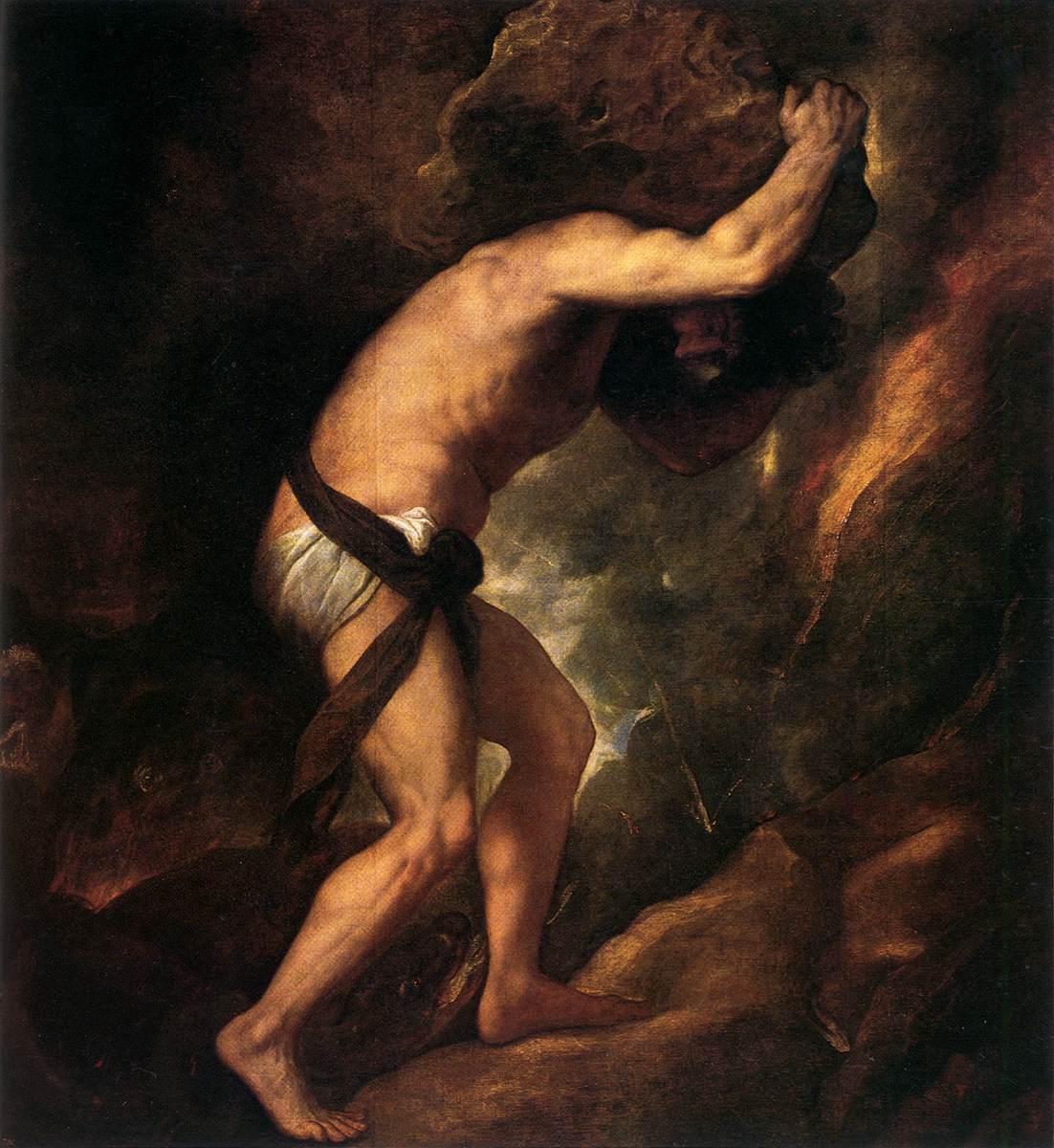
Sisyphus' Whisperings


Life is about a rebellion. For, there is no one can deny that the end of every life, no matter how grandiose or how accursed his life is, there is only void and death in the end of the day. One cruel day and all life’s work will be unraveled. This shocking revelation is indeed catastrophic to the contemplating human, as we are the only ones who has been bestowed the gift and curse to actually feel that we are dying. Certain people who are more sensitive has succumbed to the fainting ticking inside their heads and decided to end their life. It is due to this terrible end that makes man so lonely and forsaken. For, he knew that everything he fought for, everything that he assimilates as a part of him is just an illusion. Man is forsaken because we can feel close proximity but to never experience unity. Dark and terrible matters, equal in their celestial size and power yet opposite in essence, like the star and the black hole. Even those two different polarities are able to become one in substance but we who have chosen life companions of lovers and friends, deep inside we knew that on the deathbed we are utterly alone.

For this, does man has any reason at all to rise from the bed? Does man has the exact meaning of what is life at all? For, what is the use of all this toil and suffering for one unknown day, we’ll just collapse like sick cows and be gone. And the happiness we seek, promised in the holy document, is yet in pursuit but still unseen by the naked eye. What supplies comfort and joy today might be the most problematic and suffocating tomorrow. Adjectives can no longer attract us, words are just empty and other people are as unbearable to us as our self to us.

Thus, the only reason for man to continue in his misery is by rebellion. Let us ponder upon the crooning of Camus, “One must believe that Sisyphus is happy...” Sisyphus, accursed forever to roll a large boulder to the top of the hill only to be thrown under again and again for eternity. This are the true archetype of man. He knew that if he toiled at the beginning of the day, he will only found himself at the botton again, body straining and aching. But, this is the law of Nature, his punishment and his bane. What are choices left for him? He decided to, while day by day he rolled the boulder upwards, he will smiled and willed him to not succumb to the most lethal of the Gods’ curse; loath upon the fate of himself.  He will not give the satisfaction to the envious Gods with his despair and moroseness. This tiny space of comfort alone, constantly disappearing from the eternal agony is the only thing that he can control and possessed. It is the gift of choice the Gods bestowed upon him and he will make good use of it. Systems by systems will come and impose its orders and rules to us, but we shall obey and bend our knees to none.

Death is certain but I shall tell you when the eternal is; it is now and then. As Blake puts it, “Close the doors of perception, and you will find eternity”. To be liberated from the pains and cycles of world is to retreat within and without, the only space we have the control. Stress and trials from the Nature is the decree of God, for what is life without its skirmishes and battle? Our life is of the colors red and grey. There will always be deaths to be mourned, battles to be lost and lessons to be learned. God only judge us from the choices that we made, for the consequences of the action is utterly not of our domain. There is no action of Good that is not-good, for the perceiving of the good and evil is only to product of separating us from the natural courses and rendering the mournful events happened to us as “separate and exclusive”, that is by looking of only now and here. But God’s omniscient is complete and eternal. 

But, just like the Nature which operates under immaculate celestial laws commands no excess and superfluity, so does the action of man must be under agreeable homeostasis. For, how can the sojourn to enlightenment can be achieved if the vehicle is sickly and weak? This journey is no place for the weak-hearted and meek herds, indeed there are only two types of man in this world; the strong-willed and the quitters. Both of them subjected under the Sisyphean rules, but the strong-willed are constantly in motion, nothing can stop him except God when He put the entire chains of cause and effects to arrest. There are always answers and more questions in this life, if we are to open our eyes wider. For those who quit, no matter how posh and pomp their robes are, no matter how sweet their chants to the phantasy high heavens, they will never find repose.


Indeed the world runs on a never ending cycle, but the cycles moved towards the telos, the source. There is nothing new under the sun, for the consciousness of men is one historically. The wake of humankind with the descent of Adam signalled the filial age of Man. And, now we are approaching old age, the delta where the old man too is as naïve and helpless as the toddler.

Thus, to be rebellious is to be passionate, and to be passionate is to go against the current. For it is not illogical for the man who possess anything, who waltzed himself into everything and who is born with a silver spoon and the rest of the entire treasure under sky’s firmament in his mouth to be called as passionate. Passionate is the language of the unrequited, the paradoxical and the damned. Just like our forefather Sisyphus, them who are passionate know that death is certain but with the power of God, everything is possible. This is indeed the exact definition of faith! To declare our mortality to high heavens yet to move so gracefully and without any frowns and fear, this is faith. To know that our time is running thin, but to cultivate this world so prosperous and bountiful! To know that love never exists in this world, there is only in-becoming of love, yet he kissed his wife dearly and treats her suits to her position as the queen of his heart! Faith is not about anticipation and grovelling about tomorrow, but to make today as their eternal. Abu Hurairah himself said that the world is of three seconds, one that has passed, one we are experiencing now and another which is uncertain for us to have it.

Faith is about being stoic and to not ask for petty things in order to demonstrate faith, he rather use his works and toils as his true demonstration of faith. To be sufficient of today, qanaah or carpe diem or any other axioms you want to apply; that is faith. And all of this requires immense passion for we are going against the river in order to trace the Origin.  And to go against the current is to be at wrong with everything.

Blessed are the man who is born either too-early or too-late. Blessed are the man who is born in the wrong time, in the wrong family, the wrong society, the wrong realm and the wrong world.  For, it is only the people who are wrong who will ask the right question. Why should the men who (thinks they) are right bother with speculations and investigation?  It is the man who find himself at wrong, to find himself as the antithesis for everything the society uphold and lived for, it is he who will be the knight of faith and passion. No one can understand him, not even his lover or his mother. No one understand Abraham, even Sarah, for why the old man must slaughter his own son who he waited diligently years by years? Who can ever understand it is the voice of God within that asks him to prove his faith? Or how he ever knows that the voice is from God himself? But, he did it anyway for he is certain that his sufferings and agony is certain but with God everything is possible. He believed that he will get Ishmael in this life time, in one way or another for no God nor benevolent spirits of the earth wish for such filicide.


Blessed the man who are thrown away from the huddles of the herd, to be so alone and cold that he can be inspired and challenged to create a fire, Prometheus of his age and time. Behold, of the outliers. Behold, the whispering of Sisyphus.He has whispered to us that to live is to rebel and to rebel is to have passion. And to be passionate is to go against the current, and to do such is to be so wrong with everything. Now, we must believe that we too, are happy.


*Sisyphus is a mythological figure who was condemned to roll a boulder uphill eternally only to start all over again. Many writers, such as Albert Camus championed the myth as the archetype of absurdism and others as an archetype of nihilism. From my humble point of view, Camus' absurdism and Nietzsche's nihilism contains shards of truth as there can never be purposes, truths or any other absolute qualities in this relative world. 


**Pictures credit to Titian (Sisyphus)